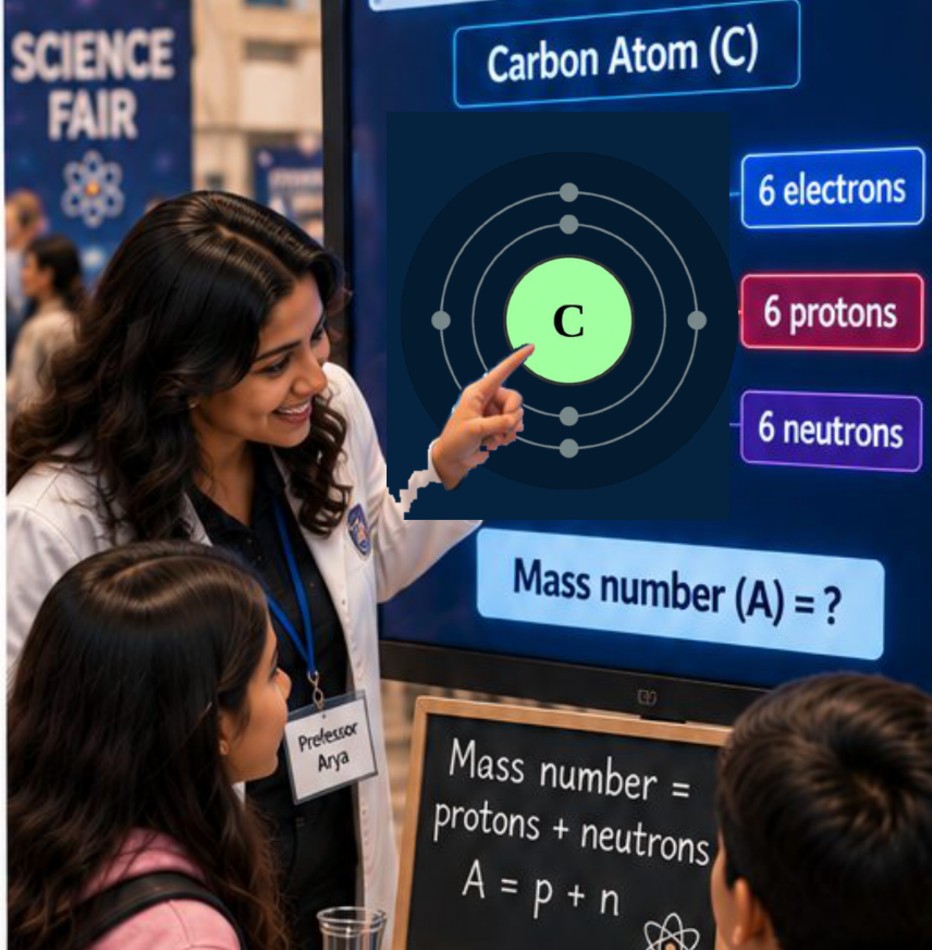
The Atom's Family Tree
At a science fair booth called The Atom Detective Agency, Anika and Rohan learn atomic number, mass number, and isotopes — and how atoms of the same element can have different numbers of neutrons.

Science stories kids actually want to read
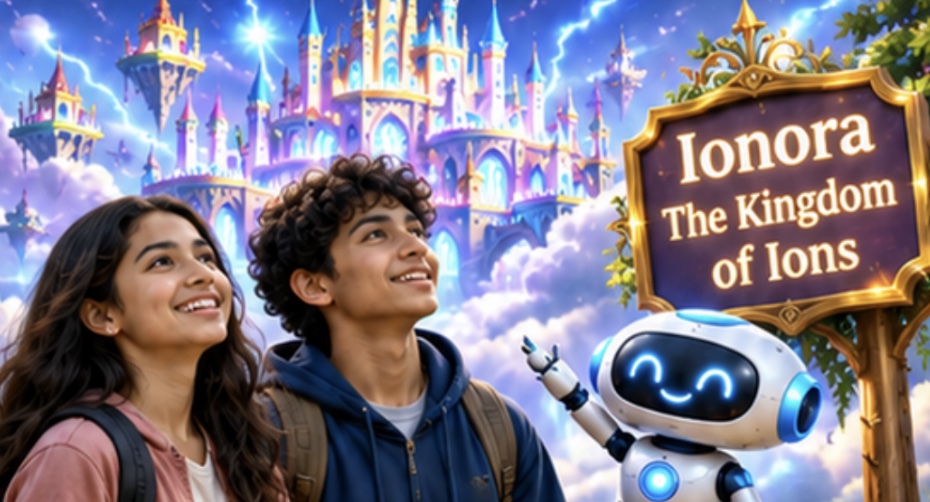
Riya and Kabir enter Ionora, the Kingdom of Ions, with their robot guide Sparky. Through glowing castles, electron-exchange bridges, and crystal lessons, they discover how atoms become charged: lose an electron to form a cation, or gain an electron to form an anion.
Opening your story…
At a science fair booth called The Atom Detective Agency, Anika and Rohan learn atomic number, mass number, and isotopes — and how atoms of the same element can have different numbers of neutrons.
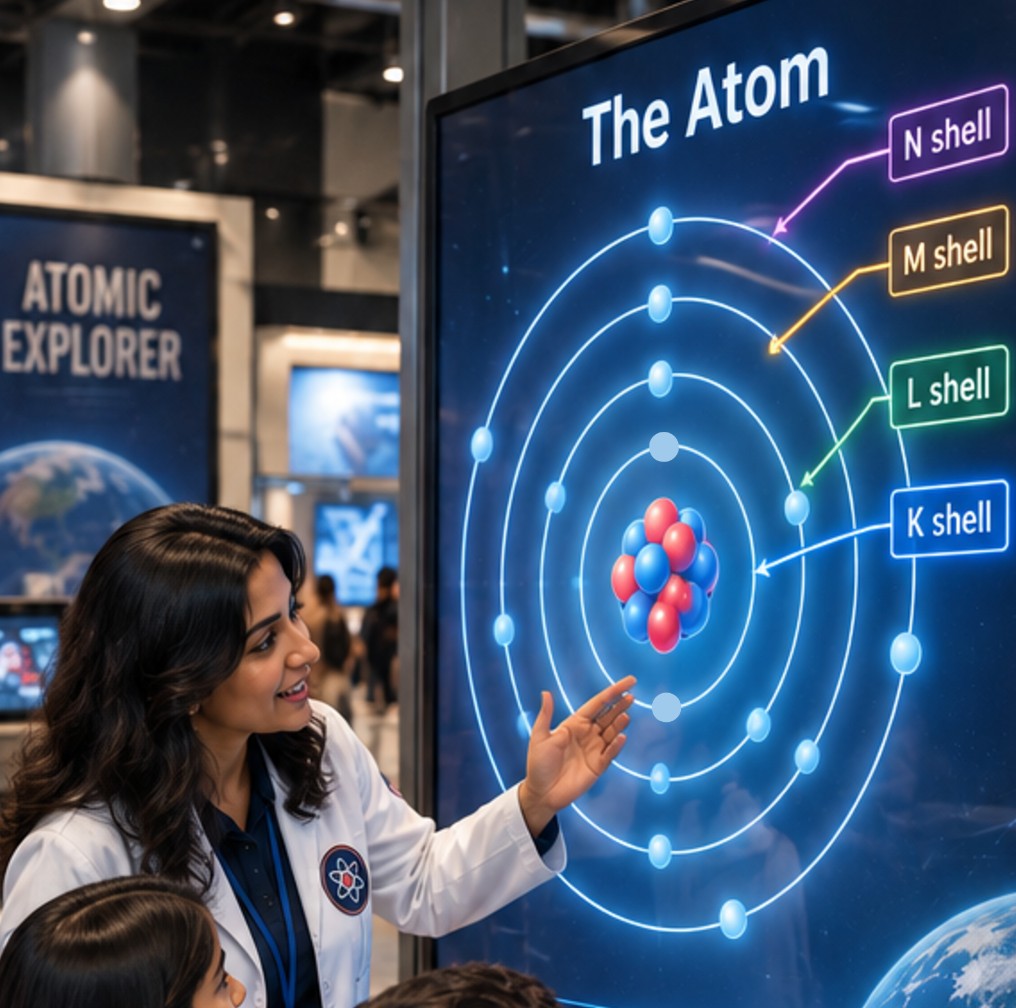
Tara and Neil explore the Atomic Explorer and learn Bohr’s atomic model — electron shells K, L, M, and N — plus electronic configuration, valence electrons, and how valency helps atoms combine.
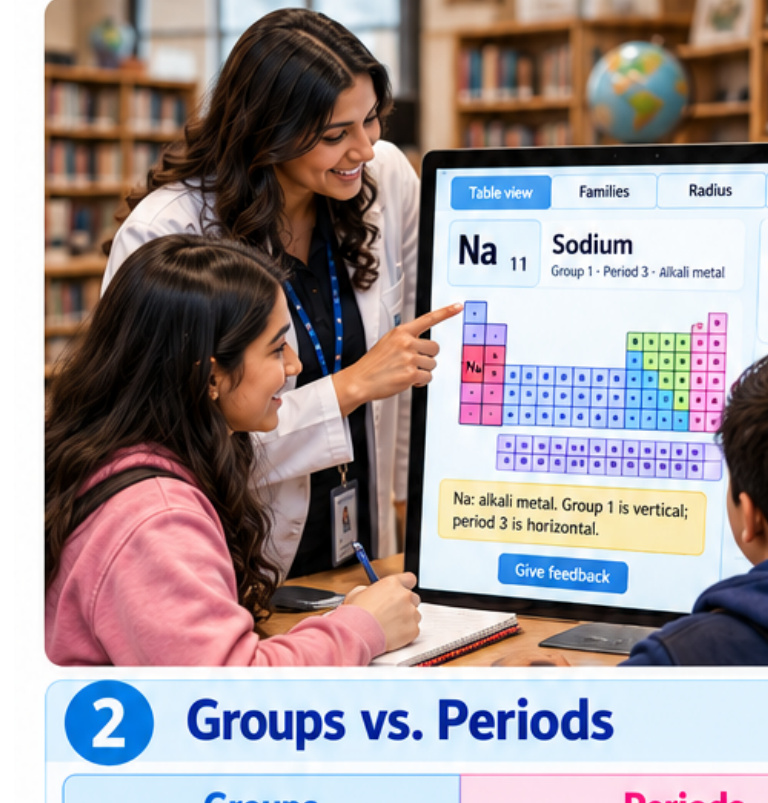
Aanya and Vihaan visit the Element Library and discover the periodic table — a secret map that organizes elements into groups and periods and helps explain why they behave the way they do.
An ion is a charged atom or group of atoms. A cation is a positive ion formed when an atom loses one or more electrons (example: Na → Na+). An anion is a negative ion formed when an atom gains one or more electrons (example: Cl → Cl−). Losing or gaining electrons changes the charge, but the number of protons stays the same, so the element identity does not change.
No written reviews yet.